
01
A consistent reference
in your room.
A measurement microphone and connected meter capture the sound at a chosen location. Calibration gives those readings a meaningful reference.
Sound level monitoring for churches
You care about the people in the room.
Give your team a shared way to understand what they’re hearing.
Live levels, agreed targets, and service history. For healthier conversations between pastors and sound teams—and a more thoughtful approach to every Sunday.
In development. Built with pilot churches in mind.
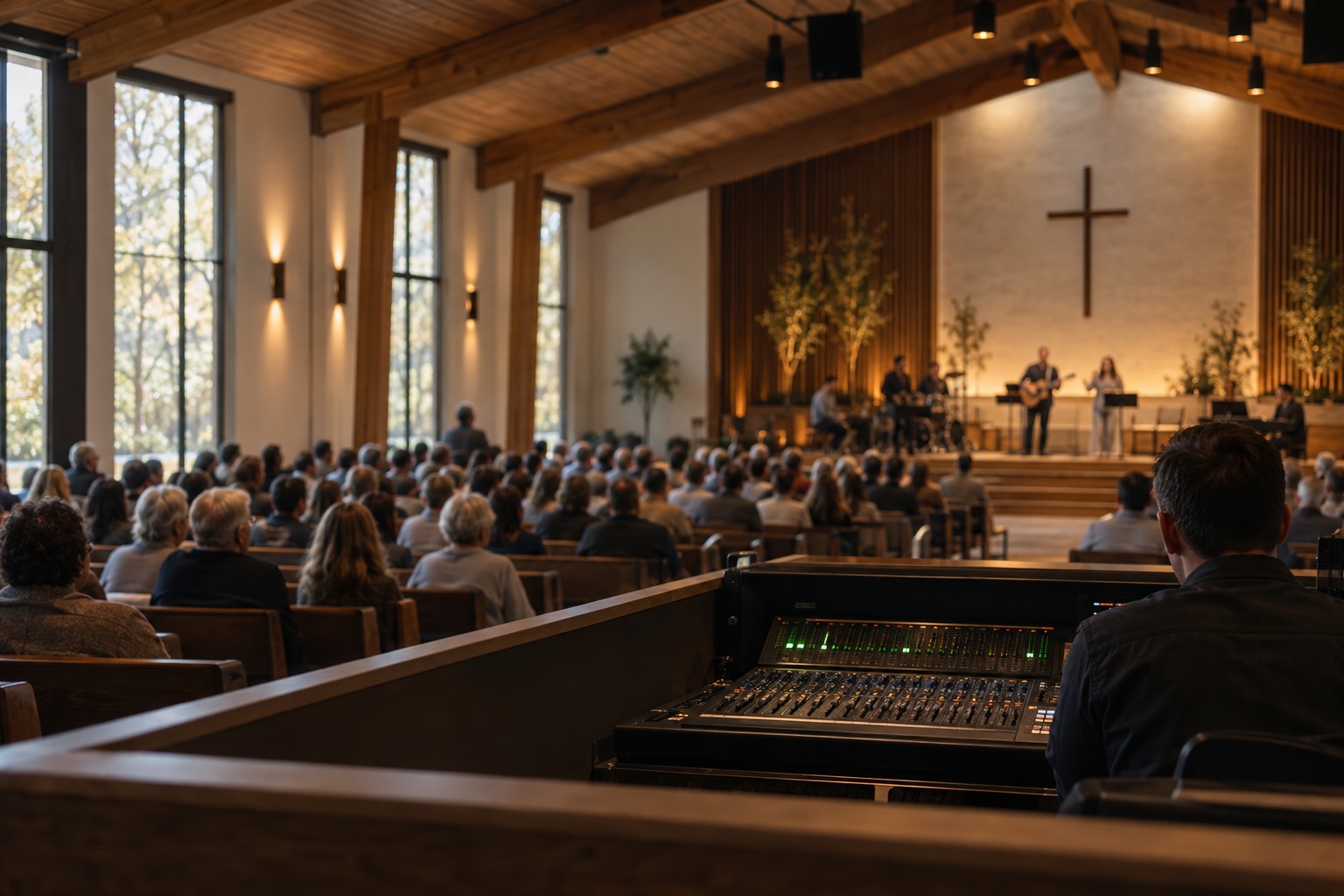
A pastor wants people to feel welcome. A sound engineer wants the mix to serve the music and the message. A volunteer wants to know what’s expected.
Those intentions belong in the same conversation.
Live Sound Levels gives your team a shared reference: what happened, when it happened, and how it relates to the targets you chose together. Room to listen. Context to respond. A starting point for next Sunday.
A number can inform a conversation.
Listening makes it a good one.
Useful in the booth. Clear enough for the whole team.
Explore an illustrative preview below.

SUNDAY GATHERING
SERVICE REVIEW
Drag the timeline to explore a moment
THIS MOMENT
86.8 dBAAn opening song. A place to discuss the energy, balance, and experience in the room.
A SHARED REFERENCE
Illustrative settings, not a recommended sound level.
Decide on the approach together. Make the target visible. Revisit it with what you learn from the room.
See live levels and recent history against your room’s target, so a momentary change has context. Keep listening while the meter keeps track.
Product illustration with sample data. Interface and availability may change as development continues.
The same readings, from the same source.
So your conversation starts in the same place.
A measurement microphone and connected meter capture the sound at a chosen location. Calibration gives those readings a meaningful reference.
Your team’s screens display readings from that meter. The booth and the pastor can refer to the same information, wherever they’re viewing it.
Bring recorded service history alongside what people experienced. Choose a specific adjustment, then learn from what happens next.
A meter describes its location. Walk the room, listen in different seats, and keep people’s experiences in the picture.
Bring a concern to your team with a moment to explore and a question to ask. Keep care for the congregation at the heart of the discussion.
You’re balancing clarity, musical dynamics, and the feel of the room. Give those decisions a shared reference that the whole team can understand.
Work from an agreed target and a visible history. Carry what the team learned into the next service, even when someone else is at the console.
The goal is a room where people can engage,
and a team that can keep learning together.
Good questions are part of good sound.
Your team chooses the targets. Your room, the people in it, the length of the service, and your church’s goals all matter. Live Sound Levels helps you see how the service relates to those decisions and revisit them with context. A target is a reference for your team, not a guarantee of hearing safety.
It helps you notice patterns, look back at a specific moment, and compare what happened with what people heard. That gives your team a focused starting point for changes. Mix balance, speech clarity, room acoustics, and coverage still need your ears and expertise.
No. A measurement microphone and meter in the room provide the readings. Your team’s devices display that shared source. This avoids comparing unrelated measurements taken on different phones in different seats.
No. Live Sound Levels monitors and provides context. Your engineer remains in control of the console and the mix. It does not automatically turn the system down or change your processing.
The product separates live monitoring from recording. Monitoring is for seeing live readings; recording saves a dated service for review. Both have an end time. Your church decides when to record and is responsible for appropriate permissions and notices.
Live Sound Levels is in development, preparing for pilot churches. Launch timing, pricing, and supported hardware packages have not been announced. Join the waitlist for product updates and pilot availability. There’s no payment or commitment to join.
A more thoughtful Sunday starts here
Be part of what comes next. Join the waitlist for Live Sound Levels updates and opportunities to help shape the pilot.
For churches of every size. For teams who care.You’re on the list
Thanks for your interest. We’ll email you about product progress and pilot availability.
You haven’t created an app account or committed to a purchase.
Manage your signupSave this private link to manage your signup. If you’ve joined before, your original link still applies.